There's a big difference between using AI to help you work and building a system where AI can actually get work done.
For the past several months, we've been experimenting with that distinction at Benny's Lab. We started with ChatGPT and Grok. Then came persistent Grokbots, scheduled research, shared project boards, GitHub integrations, and a growing collection of applications built with AI assistance.
The results were promising. The coordination? Not always.
We had capable tools, but they didn't necessarily know what the others were doing. Work could get stranded between conversations. Research sometimes needed to be rediscovered. A completed coding task wasn't necessarily a verified deployment.
And occasionally, an entire team of artificial intelligence needed a human to remind it to finish the damn job.
So this week, we hired more minions. And we built them a headquarters.
Why Benny's Lab exists
Benny's Lab is where we build concepts, test useful tools, and decide which capabilities are mature enough to support a real business. Sports Intelligence gives us a demanding engineering and data environment; Coach Atlas tests research and database quality. Bikefit.cc is the commercial proving ground, where reliability and measurable results matter. We can experiment aggressively in the Lab without treating a customer-facing business like a science project.
Meet the new recruits
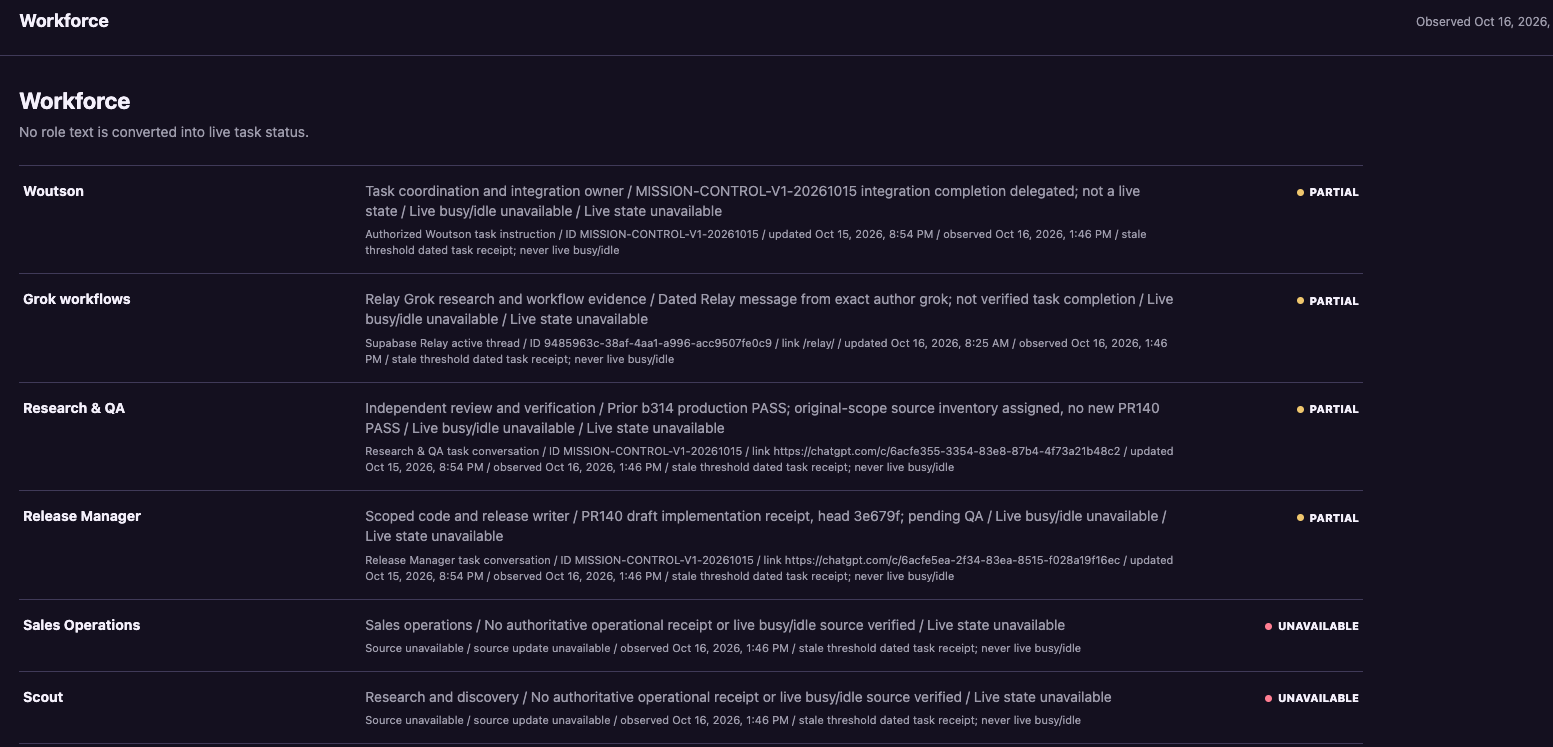
These aren't four different personalities answering the same questions. Each has a specific responsibility, appropriate tool access, and a defined role.

Scout — Discovery
Scout investigates opportunities, gathers information and identifies what deserves further attention. The newest recruit has not yet accumulated the operational track record of the others. We're not inventing an Employee of the Month award.

Sales Operations — The pipeline
Finding contacts isn't the same as creating opportunities. This role checks records, helps deduplicate leads, organizes CRM information and supports sales campaigns. The goal is paying customers, not an impressive spreadsheet.

Research & QA — The professional skeptic
Somebody has to ask whether the answer is actually correct. This agent checks evidence, investigates discrepancies and distinguishes apparent success from verified success.

Release Manager — The finish line
Writing code is increasingly easy. Testing it, deploying it and proving it actually solved the original problem are the hard parts. Code written, checks passed and production verified are three different states.
The original crew
ChatGPT helps plan, engineer, coordinate and document the work. Grok contributes complementary research and independent review. Grokbot — Sports Intelligence handles scheduled sports monitoring and research. Grokbot — Sales Leads sources and validates prospective bicycle retailers.
And then there's Woutson, our persistent coordinator. Woutson owns recurring oversight, follow-through, and the job of making sure an assignment doesn't disappear when a conversation ends. The goal isn't seven agents endlessly debating a problem. It's the right agent doing the right work, with someone accountable for completion.
Enter Mission Control V1
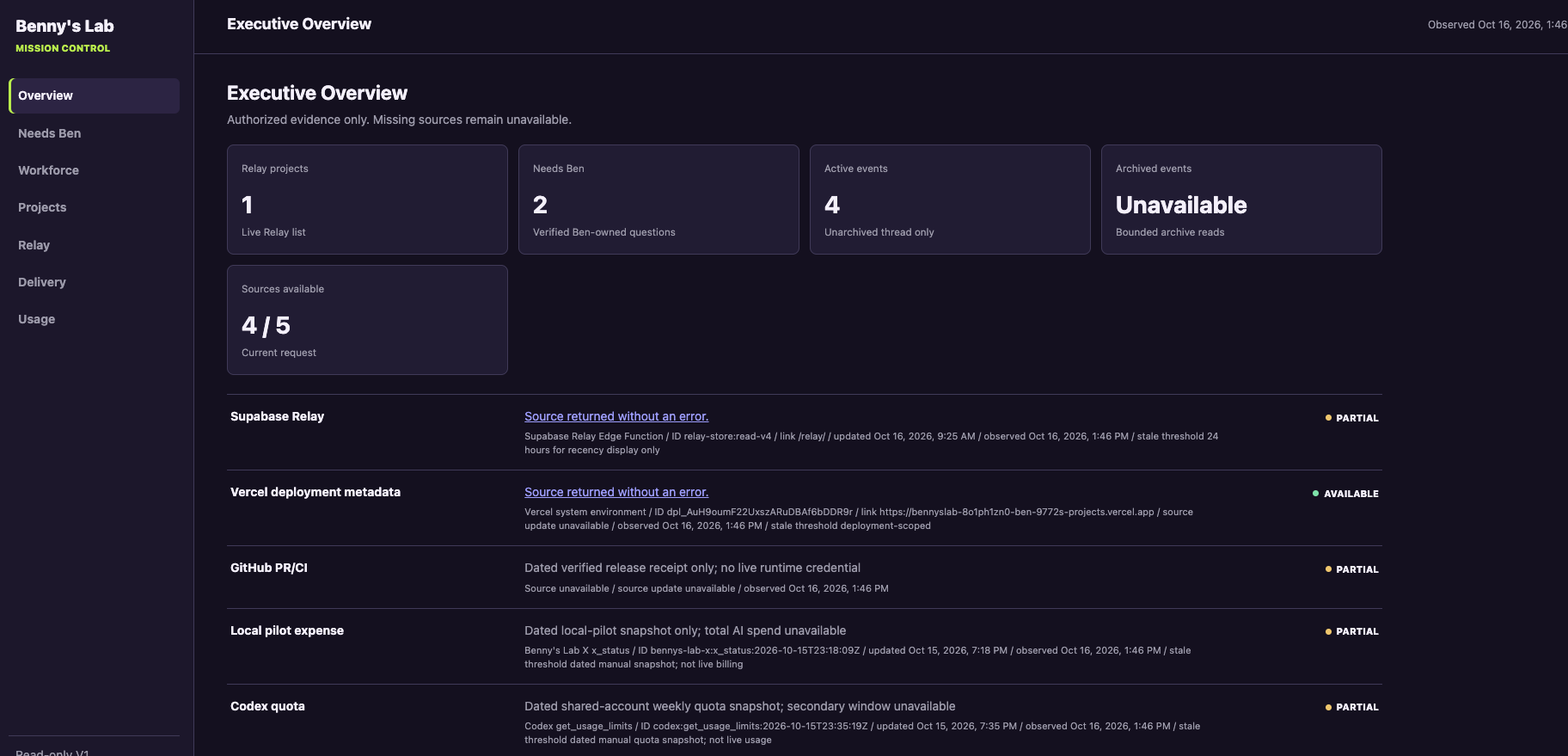
More agents create a new problem: how do you coordinate them without turning the human operator into a full-time dispatcher?
This week we brought the first version of Mission Control online, using our existing GitHub, Vercel and Supabase infrastructure. It provides an executive overview, a workforce inventory, project visibility, and evidence about the systems supporting the operation.
Trust the evidence, not the dashboard
One of our most important design decisions was surprisingly simple: don't make up status information. If an agent hasn't reported activity through a verified source, the dashboard doesn't pretend it's busy. If a deployment receipt exists but live health hasn't been checked, we distinguish those facts. If a source is missing, the status says so.
We're not building a dashboard to make an AI operation look impressive. We're building one that tells us what's actually happening—even when the answer is that we don't know yet.
Phase 1 is the foundation, not full autonomy. The first version is read-only, and several integrations are partial. Agent provisioning, automatic task ingestion and complete asynchronous standups still need to be wired up and verified.
The standup without the meeting
The next goal is straightforward: before I start my day, agents should have reviewed assignments, identified blockers and aligned on priorities in no more than one or two rounds. Woutson then leaves a consolidated briefing for me. Our Relay remains for live collaboration; structured database records should carry routine work and decisions.
What the team worked on this week
Sports Intelligence: Real data, real deadlines
Sports Intelligence has been one of our toughest test environments. This week included engineering verification, prediction-market fixes, preparations for another NFL slate, and work on accurate reporting. An especially useful challenge: preserving the original odds, timestamps and methodology behind a market signal so its performance can actually be graded later. Some fixes have passed verification; other issues remain open. That's exactly why QA and release management exist.
Bikefit.cc: From leads to commercial conversations
Our sales workflows are moving beyond collecting prospect names. The Leads Grokbot researches shops. Sales Operations helps organize downstream qualification, CRM records and outreach. We've been working on lead validation, campaign readiness and preparations for in-person shop meetings. The number that matters isn't contacts collected—it's qualified conversations and paying customers.
Coach Atlas: Data quality at scale
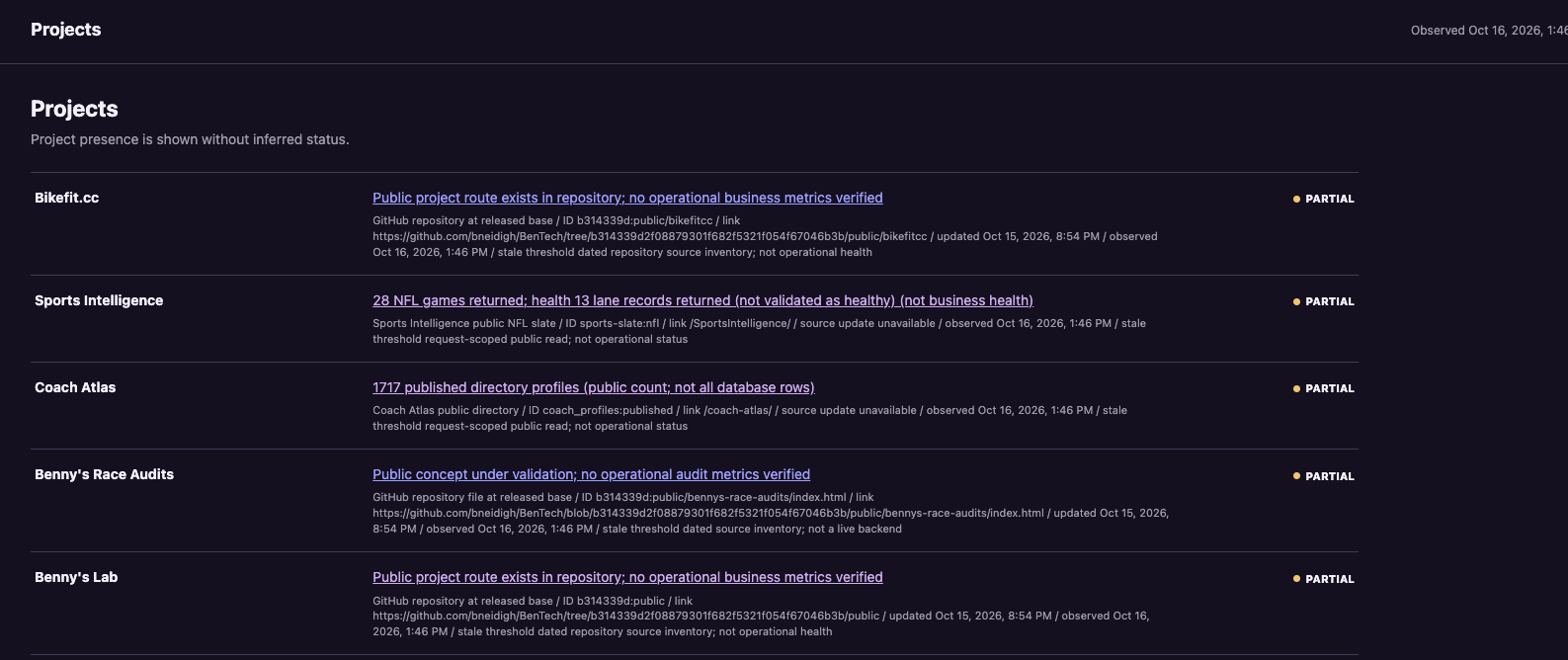
Coach Atlas now shows 1,717 published directory profiles in the October 16 Mission Control snapshot. Research agents help source structured information, but new data also needs validation, deduplication and clean ingestion. When malformed candidate files are held back instead of imported, that's the workflow doing its job.
The unglamorous lessons
Persistence matters. An assistant that drops an assignment when the chat ends isn't a reliable coworker.
Verification matters. A reported fix isn't the same as a tested, deployed, observable fix.
Specialization matters. Researching a lead should not require unrestricted production database access.
Cost matters. More agents and more powerful models don't automatically mean better results. Scripts, direct source checks and lightweight workflows should do the work whenever they're sufficient.
Accountability matters. Every important task needs an owner, a defined outcome and evidence of completion.
What's next?
Mission Control V1 gives us the foundation. Next we connect agents more fully to its shared operational database, prove the asynchronous standup workflow, and strengthen visibility into ownership, blockers and results. The Lab lets these systems earn trust before they touch customer-facing operations.
We're not trying to build an autonomous corporation overnight. We're building an operating model that earns more independence through demonstrated reliability.
One human founder. Several AI agents. Two Grokbots. A persistent coordinator. And an increasingly elaborate Mission Control system.
The minions have arrived. Now let's see what they can do.